Menopause and Eating Disorders
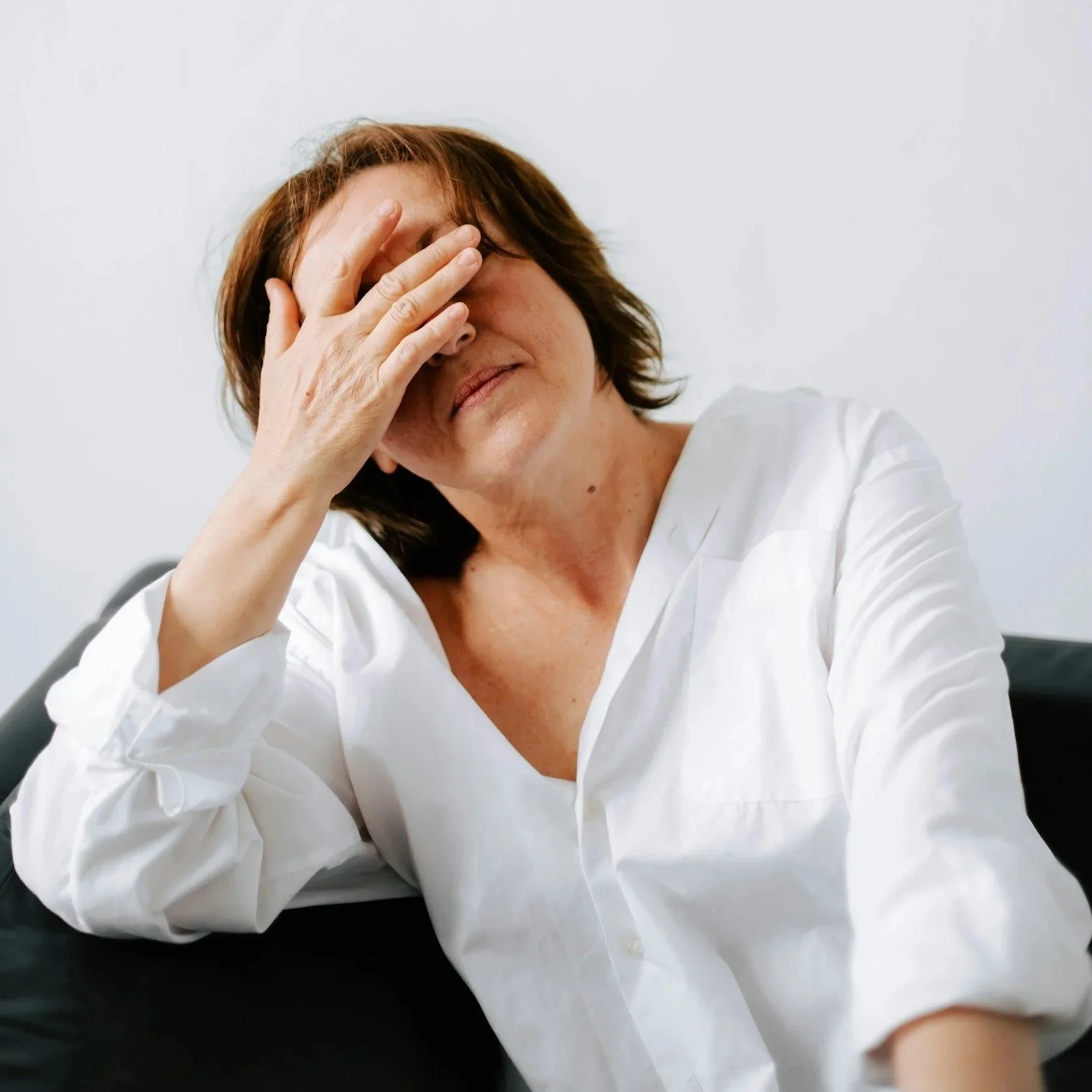
For decades, eating disorders have been framed as a problem of adolescence — a crisis of teenage girls, driven by puberty, peer pressure, and social media.
That story is not only incomplete; it’s actively misleading. Prevalence data consistently shows that eating disorders can begin at any age, and a growing body of research confirms what many clinicians are now seeing in practice: cisgender women in midlife and beyond are increasingly seeking treatment for new-onset, recurrent, and chronic eating disorders.
In a comprehensive 2019 review, Karen L. Samuels and colleagues found that disordered eating and body image concerns are widespread among women over 50, yet remain largely invisible in both research and clinical care.
Rather than focusing on age alone, it’s more useful to look at life events. Eating disorders often emerge not only during puberty, but during moments of intense transition—grief, job loss, illness, divorce, caregiving, or identity shifts.
In my former clinical work, a midlife woman came into our eating disorders clinic feeling deeply ashamed that she had relapsed after decades of recovery. Her life had suddenly become unmanageable—she lost her job and her mother in the same year, while worrying about her marriage and children. Food restriction became a way to regain a sense of control when everything else felt unstable.
Menopause is one such life transition that can quietly destabilize even people who once felt solid in their recovery. Physiologically, it brings real changes: shifts in hormones, metabolism, sleep, mood, and body composition. Psychologically, it often coincides with layered stressors—career burnout, caregiving for aging parents, grief resurfacing, and a reckoning with aging and identity.
As Lesley Williams and colleagues note in their 2024 narrative review, midlife is a period of heightened vulnerability for body dissatisfaction and eating concerns, shaped by both biological changes and social pressures.
Those social pressures are difficult to ignore. Diet culture hits especially hard in midlife, as messages about the “menopause belly” and “reversing aging” flood social media, wellness spaces, and even medical offices. These narratives frame natural biological changes as personal failures, encouraging restriction, rigid food rules, and obsessive monitoring of the body.
For someone with a history of an eating disorder—or even latent vulnerability—this messaging can act as a powerful trigger, pulling them back into patterns they thought were long behind them. As Williams and colleagues emphasize, that weight-centric health messaging can inadvertently reinforce disordered eating, even when framed as “wellness.”
What makes this especially worrying is how often midlife eating disorders go unnoticed. Many women don’t recognize that they are entering menopause or understand how it might affect their mental health. At the same time, primary care providers rarely ask older women about eating or body image. In their paper, Samuels and colleagues report that many women receiving treatment for eating disorders say no medical provider ever inquired about their relationship with food or their body. When women present in larger bodies, the clinical focus often defaults to weight loss, reinforcing the very dynamics that sustain disordered eating.
The consequences can be serious. Eating disorders in midlife may carry heightened medical risk because physiological resilience decreases with age. Restriction, purging, or bingeing can exacerbate existing conditions and accelerate decline, contributing to electrolyte imbalances, cardiac dysfunction, decreased bone density, cognitive impairment, hormonal disruption, chronic pain, sarcopenia, and worsening menopause symptoms—patterns documented in both clinical and epidemiological research.
The deeper problem is not menopause itself—it’s the collision of biological change, psychological stress, and a culture that equates worth with thinness and control. If we continue to view eating disorders as “teen problems,” we will miss the people most at risk of suffering in silence.
Menopause doesn’t cause eating disorders. But it can create the perfect storm: a body that feels unfamiliar, a life that feels overwhelming, and a culture that offers food restriction as a solution. The real work—clinically and culturally—is learning to recognize midlife not as a time to shrink, fix, or discipline the body, but as a time when care, curiosity, and support are more necessary than ever.
RESOURCES
Articles
Samuels KL, Maine MM, Tantillo M. Disordered Eating, Eating Disorders, and Body Image in Midlife and Older Women. Curr Psychiatry Rep. 2019 Jul 1;21(8):70. doi: 10.1007/s11920-019-1057-5. PMID: 31264039.
Williams L, Gurung J, Persons P, Kilpela L. Body image and eating issues in midlife: A narrative review with clinical question recommendations. Maturitas. 2024 Oct;188:108068. doi: 10.1016/j.maturitas.2024.108068. Epub 2024 Jul 20. PMID: 39084135; PMCID: PMC12186726.
NYTimes: Anorexia in Middle Age & Beyond
Books
Signe Darpinion: A Woman's Guide to Menopause, Body Image, and Emotional Well-being at Midlife